The Science of Biophilic Design: Why Your Brain Craves Plants at Work

Lush Living wall in a workplace break room.
You've probably noticed that walking into a space with natural light and greenery just feels different. There's a reason for that — and it's not aesthetic intuition. It's neuroscience.
The Biophilia Hypothesis, first articulated by biologist E.O. Wilson in his 1984 book Biophilia, proposes that humans have an innate drive to connect with other living systems. It's an evolutionary argument: for most of human history, thriving meant being attuned to the natural world. That attunement didn't disappear when we moved indoors.
What the Research Shows
A landmark 2014 study by researchers at the University of Exeter — led by Dr. Marlon Nieuwenhuis — tested the effect of plants on office workers in two large commercial offices. Their findings, published in the Journal of Experimental Psychology: Applied, were striking: enriching a 'lean' office with plants increased productivity by 15% and improved scores for air quality, concentration, and workplace satisfaction.
A separate body of research from Harvard's T.H. Chan School of Public Health found that cognitive function scores dropped significantly as indoor CO2 concentrations rose — with scores declining by 21% at moderate CO2 levels (1,000 ppm, common in many offices) and by up to 50% at higher concentrations. Plants counteract this directly through photosynthesis, absorbing CO2 and releasing oxygen.
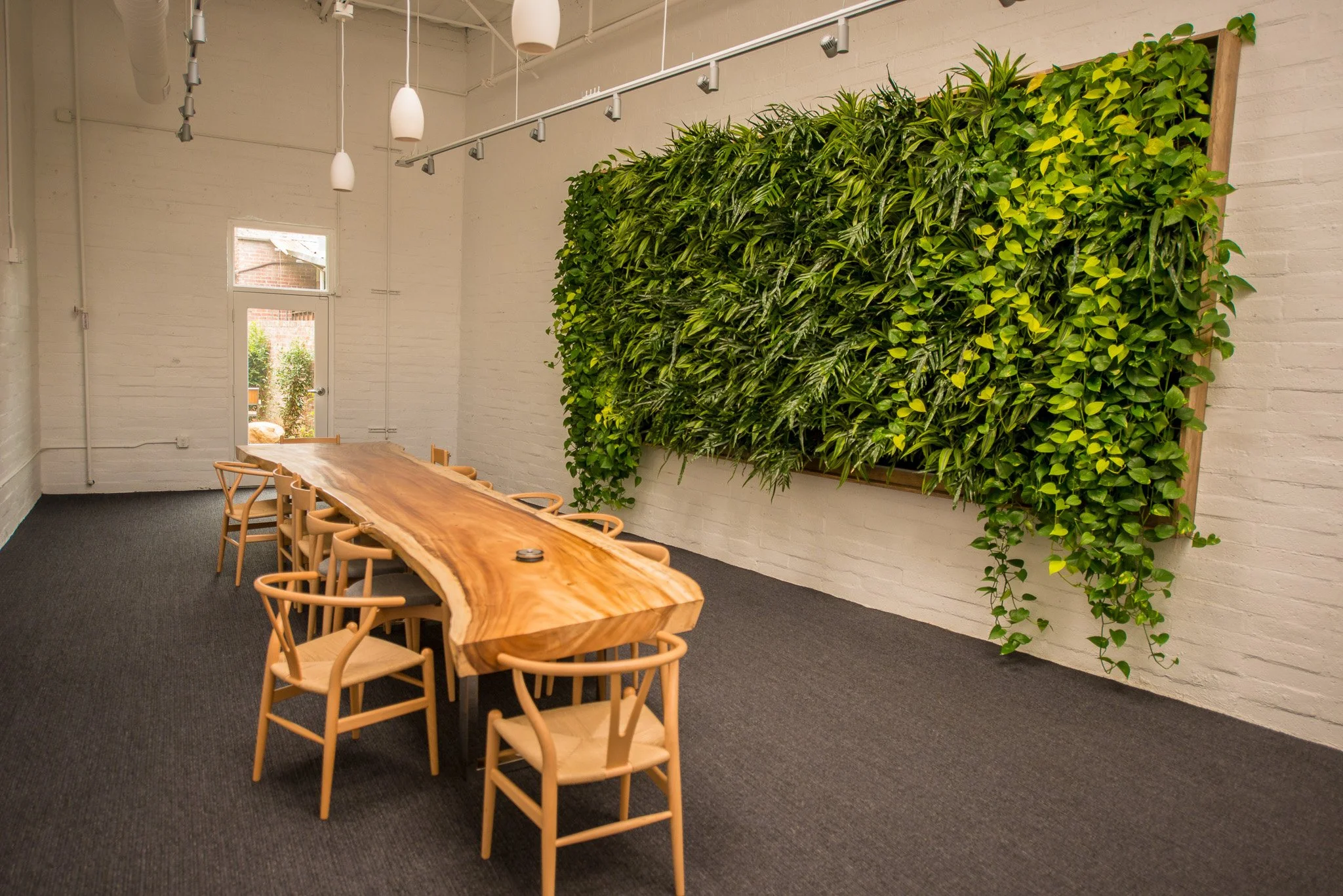
Large Lush Living Wall of plants in a meeting room.
What This Means for Your Space
When you bring living plants into a workspace, you're not just making it look better. You're changing the biochemical environment. Measurable reductions in ambient CO2. Improved air quality through phytoremediation. Documented reductions in stress hormones. Enhanced focus and cognitive output.
At Lush Elements, every installation we create for Santa Barbara businesses and homes is built around these principles. Whether it's a cascading living wall in a restaurant dining room or a moss installation in a corporate lobby, the intention is always the same: to create a space that your nervous system recognizes as good.
The Three Pillars of Biophilic Design
1. Direct Nature Contact
Live plants, water features, and natural light are the most powerful biophilic tools. A Lush Living Wall brings dozens of living organisms into a space, actively growing and changing — giving occupants something alive to connect with.
2. Indirect Nature Contact
Natural materials, organic patterns, and botanical imagery all signal 'nature' to the brain — even when the real thing isn't present. Preserved moss walls, botanical art, and natural wood vessels do exactly this.
3. Space and Place Conditions
Humans instinctively respond to spaces that offer prospect (a wide view), refuge (a sheltered corner), and mystery (something just out of sight). Plant installations can create all three — softening harsh open offices, defining intimate dining nooks, or adding depth to flat corporate lobbies.
Why Santa Barbara Is Especially Well-Suited for Biophilic Design
Santa Barbara's Mediterranean climate means we're already surrounded by natural beauty year-round. When businesses and homes bring that same lush, organic energy indoors — through living walls, Tillandsia installations, and curated plant design — they're reinforcing something the region already does naturally.
Founded in 2012, Lush Elements has spent over a decade helping Santa Barbara businesses, restaurants, hotels, and homeowners make this connection. Our work for clients like Sonos, Procore, and Zoom reflects what forward-thinking organizations already understand: the environment shapes the people inside it.
Ready to Bring Nature Indoors?
Whether you're designing a new office, refreshing a restaurant, or simply wanting your home to feel more alive, a 30-minute consultation with the Lush Elements team is the place to start. We'll help you determine the right installation for your space, budget, and goals — at no cost.